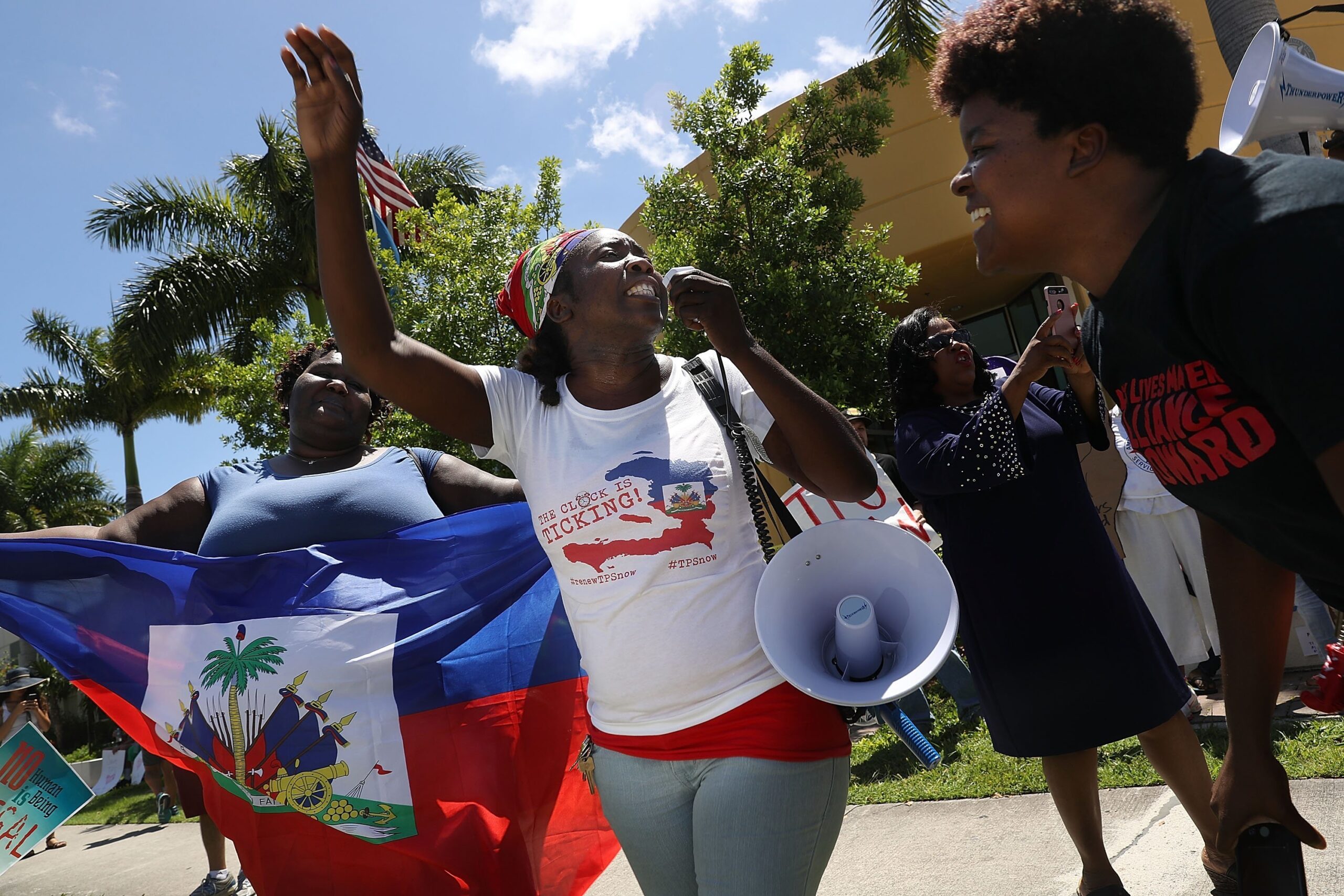
The Supreme Court has temporarily halted President Donald Trump’s administration from ending Temporary Protected Status (TPS) for approximately 350,000 Haitians and 6,000 Syrians in a Monday ruling that preserves their legal protections. In an unsigned decision, the justices rejected the administration’s request to immediately lift lower court orders blocking the termination, ensuring affected immigrants retain work authorization until the high court hears arguments next month.
Congress established TPS in 1990 to allow individuals already residing in the United States to remain and work legally when their home countries face war, natural disasters, or other extraordinary conditions that make it unsafe to return. The program provides temporary protection without creating a direct path to citizenship.
The Trump administration asserts that the Secretary of Homeland Security holds broad authority to determine when a nation no longer qualifies for TPS and insists courts should not second-guess such decisions—particularly in cases involving immigration enforcement, foreign policy, and national security considerations. Solicitor General D. John Sauer urged the justices to intervene, warning that without resolving these challenges, “this unsustainable cycle will repeat again and again,” generating more competing rulings and conflicting interpretations of interim orders.
Legal advocates contesting the terminations argue conditions in Haiti and Syria remain dangerous and that the administration acted unlawfully. Lower federal courts in New York and Washington have upheld TPS protections for both groups, with a District Court ruling suggesting anti-immigrant bias likely influenced the Haiti designation decision.
This case follows the Supreme Court’s prior alignment with the administration in emergency proceedings involving Venezuela, where the government moved to end TPS for hundreds of thousands of Venezuelans without full judicial review. Last September, then-Homeland Security Secretary Kristi Noem terminated Syria’s TPS eligibility, citing statutory non-compliance, and separately challenged Haiti’s status under similar grounds.
The administration has also pursued TPS terminations affecting citizens from Afghanistan, Cameroon, Honduras, Myanmar, Nepal, Nicaragua, Somalia, Venezuela, and Yemen, indicating the Supreme Court’s eventual ruling could have far-reaching consequences as Trump advances a broader crackdown on humanitarian immigration protections. A decision is expected by the end of the court’s current term this summer.