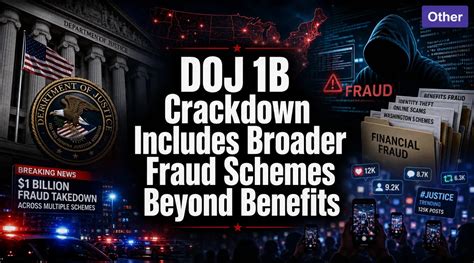
South Carolina Attorney General Alan Wilson said on Thursday that the Justice Department’s new National Fraud Enforcement Division is signaling a tougher federal crackdown on taxpayer-funded fraud with its first coordinated enforcement sweep.
The division announced 17 cases across seven Southeastern states involving more than $350 million in alleged intended losses. Wilson and Assistant Attorney General Colin M. McDonald said the cases reflect a coordinated effort to target fraud schemes after years in which fraudsters “felt unencumbered” ripping off taxpayer-funded programs.
Appearing on “Finnerty,” McDonald and Wilson said the coordinated action, unveiled at a roundtable in Columbia, South Carolina, targets the same playbook prosecutors keep encountering nationwide.
“Everywhere we go, every district we go to, every state, we’re finding the same recurring pattern,” McDonald said, describing “people exploiting our taxpayer-funded programs to enrich themselves at the expense of all of the rest of us.”
The cases, brought with prosecutors in Alabama, Florida, Georgia, Louisiana, Mississippi, North Carolina and South Carolina, involve alleged fraud involving the Supplemental Nutrition Assistance Program, Small Business Administration loans, housing benefits and taxes. Since July 4, federal prosecutors have charged 12 defendants in schemes involving more than $90 million in losses.
Asked whether any of the cases involved people in the country illegally, McDonald said the fraud schemes “come in all shapes and sizes” and increasingly involve foreign nationals. McDonald pointed to a Boston case in which 15 people accused of being in the U.S. illegally allegedly used stolen identities to defraud federal programs. He said the division is using data analytics to identify suspects “who’ve never even set foot in America.”
Wilson said cross-jurisdictional cooperation, not partisanship, is driving results. He credited work last summer alongside North Carolina’s Democratic attorney general in unmasking $20 million in Medicaid fraud during Operation Border Wars.
“We had to cross geographic lines. We had to cross jurisdictional lines,” Wilson said. “We had to cross partisan lines to be able to effectuate that,” he added, noting that “blue states out there” are still “dragging their feet.”
McDonald also cited a South Carolina indictment charging six people with supplying counterfeit employment documents to people in the U.S. illegally. In Florida, Daniel Liburdi agreed to forfeit three properties in Miami Beach and the U.S. Virgin Islands, two Ferraris, a Range Rover and more than $400,000 from financial accounts after pleading guilty to filing a false tax return and agreeing to pay more than $34.8 million in restitution.
Wilson said the cases, including the luxury asset forfeitures, reflected a sense of impunity that authorities are now working to end. “For years, they have felt unencumbered. They have felt unpoliced,” he said. “And now that is changing. These people are going to go to prison.”
The department separately unveiled data-sharing agreements with the seven states and new anti-fraud task forces in North Carolina, Mississippi and Florida, giving prosecutors access to state corporate registration and public benefits payment data. McDonald said the government has “historically been late to the game” against fraud rings using newer technologies, and that breaking down barriers between agencies is the only way to close the gap.
By Jim Thomas