In an interview ahead of the recent official opening of his presidential library, former President Barack Obama was asked to name his greatest accomplishment. The first thing that came to mind was the Affordable Care Act (ACA).
As he stated, “For all the resistance from our political opposition, the Affordable Care Act has now helped 50 to 60 million people, and continues to help people even though the current Congress has tried to weaken it and taken away some of the subsidies that were really helping a lot of working people.”
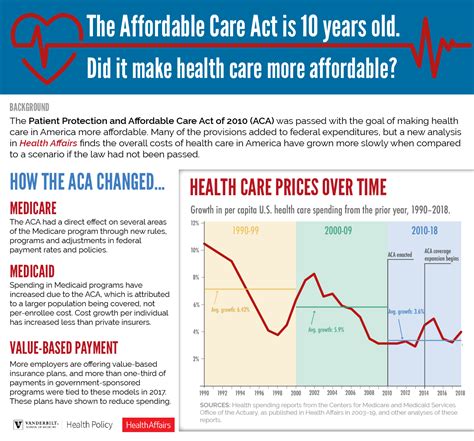
However, on multiple metrics—including cost of coverage, availability of high-quality care, and sustainability of public safety-net programs—America’s healthcare system is in worse shape than it was before Obamacare became law.
Cost affordability has become critical. A recent Gallup poll shows fewer than half of Americans can consistently afford access to quality care. Obama attributes these problems to the expiration of enhanced premium subsidies earlier this year. This reasoning, however, ignores that those subsidies were not part of the ACA; they were a temporary pandemic-era addition enacted more than a decade after the law’s passage.
In reality, premiums were soaring long before such subsidies appeared. According to the U.S. Department of Health and Human Services, average monthly premiums in states using Healthcare.gov more than doubled from $232 in 2013 to $476 in 2017, reaching $619 a month last year.
The root cause lies in the ACA’s design. The law required insurers to cover a lengthy list of mandated essential health benefits, restricted their ability to price plans according to risk, and imposed other costly regulations on the individual market. Insurers responded by raising premiums.
Rather than addressing these systemic flaws, Democrats have attempted to paper over rising costs through ever-more generous taxpayer-funded subsidies—including the enhanced subsidies Obama praised.
The ACA also introduced distortions into the insurance market. For example, it created a taxpayer-financed bridge to early retirement by making it easier for Americans in their late 50s and early 60s to leave the workforce before Medicare eligibility. Obamacare initially included a temporary federal subsidy program for early retirees. Once exchanges opened, premium tax credits, guaranteed access to insurance, and caps on premiums for older enrollees effectively subsidized early retirement.
The Congressional Budget Office (CBO) warned years ago that such subsidies would lead some people to retire earlier than they otherwise would. This prediction proved accurate: a 2020 study by the National Bureau of Economic Research found the law reduced labor-force participation among 60- to 64-year-olds and shrank the near-elderly workforce by roughly 110,000 people between 2014 and 2018.
At a time of trillion-dollar deficits and mounting entitlement costs, subsidizing early retirement represents a stunning misuse of taxpayer money.
The insurance market also suffered under the law. Many insurers fled exchanges after struggling to make the economics work. A recent Government Accountability Office (GAO) report found that the median number of insurers participating in individual markets fell from 30 per state in 2011 to 10 in 2022.
The result is a law intended to improve patient choice has ended up doing the opposite.
The law’s Medicaid expansion generated additional problems. Obamacare expanded Medicaid eligibility to able-bodied adults earning up to 138% of the federal poverty level, with Washington promising to cover 90% of costs. This incentive led states to enroll able-bodied adults in droves, creating a population of roughly 20 million people. The Paragon Health Institute estimates that some 6.6 million of these individuals were ineligible for coverage as of 2024, costing federal taxpayers nearly $37 billion.
Fifteen years after the ACA’s passage, America’s healthcare system is less affordable, less competitive, and less fiscally sustainable.
Yet many progressives view these shortcomings as an argument for even greater government control. Obama himself endorsed single-payer healthcare before entering office, positioning Obamacare as a step in that direction. Its record offers little reason to believe the next step would work any better.