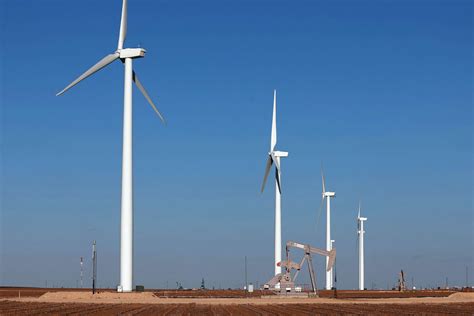
Dozens of wind energy projects in Texas have stalled after the War Department halted routine federal permit approvals over national security concerns.
Industry experts say the freeze expands the Trump administration’s campaign against renewable energy development.
According to data compiled by the American Clean Power Association, 54 wind projects in Texas are awaiting War Department review to determine whether proposed turbines could interfere with military operations or airspace.
The delays are part of a broader nationwide backlog affecting 165 onshore wind projects.
Under federal law, any structure taller than 200 feet—including wind turbines, antennas, and smokestacks—must first undergo review by the Federal Aviation Administration before being evaluated by the War Department for potential impacts on military training, radar systems, and aviation routes. The law requires the Pentagon to complete these reviews within 60 days of receiving applications from the FAA.
However, industry officials say the process has effectively stopped.
“Right now, the entire process has just ground to a halt,” said Dave Belote, a wind energy consultant who helped design the military review system more than 15 years ago.
Typically, the War Department assesses whether turbines fall within radar sightlines or low-altitude military training corridors. Developers and military officials historically resolved concerns through mitigation agreements in a process that often took only weeks.
“In the past, those have been fairly trivial—you meet the requirements and you get the permit,” said Jonathon Blackburn, an Austin-based energy consultant.
According to the trade association, the Pentagon has not approved a wind project since August 2025. In April, officials also canceled all pending meetings with wind developers seeking federal clearance.
Developers say the delays are disrupting financing agreements, jeopardizing local permits tied to federal approvals, and postponing turbine orders, construction schedules, and contractor agreements.
“There’s a lot of delay coming out of the permitting process from the federal government, and delays add cost,” Blackburn said. “Maybe the federal government is not able to flat-out stop projects, but they are able to drag them out.”
A War Department official stated that the agency continues to evaluate projects to ensure they do not compromise military readiness or national security. The official described the review process as “inherently complex and time-consuming” because it requires balancing energy development, military operational needs, and interagency coordination.
The department did not directly address why reviews have exceeded federally mandated deadlines.
Critics of the administration say the permitting freeze reflects broader hostility toward renewable energy, particularly wind power.
“It’s not clear why these policies are being implemented during an affordability crisis, but I think it shows the level of disdain the administration has for renewable energy in general and wind power specifically,” said Michael Webber, an energy professor at the University of Texas.
Texas leads the nation in wind energy generation and is also home to a large concentration of military facilities and training airspace.
A 2019 report from the Texas A&M Natural Resources Institute identified 17 military bases with flight facilities across the state— including training routes linked to Laughlin Air Force Base near Del Rio, Naval Air Station Corpus Christi, Randolph Air Force Base near San Antonio, and Dyess Air Force Base in Abilene.
The permitting slowdown marks the latest effort by the Trump administration to curb wind energy expansion nationwide. Much of the administration’s previous focus centered on offshore wind projects.