Friday, 15 May 2026 07:52 AM EDT
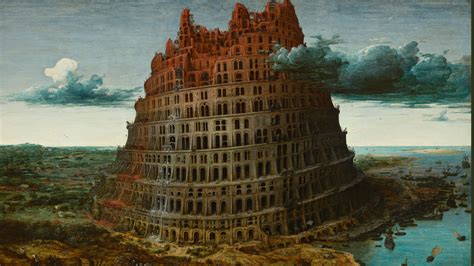
In the Book of Genesis, humanity speaks with one tongue, resolving to build a city and tower “whose top may reach unto heaven.” The intended purpose of this structure was not merely for shelter or utility but for self-exaltation—as illustrated by the verse: “Let us make ourselves a name, lest we be scattered abroad upon the face of the whole earth.”
This project was breathtaking in ambition and terrifying in implication: an overt attempt to storm the divine realm through collective human will. God observed their unity and declared that “nothing will be restrained from them, which they have imagined to do.” He then confounded their language, scattering humanity. The tower remained unfinished—a monument to hubris.
Today, tech-driven members of society are building this same tower again. Only now, the bricks are silicon, the mortar is computer code, and the “heaven” being pursued is Artificial General Intelligence (AGI). AGI has the capacity to reason, invent, and act across every domain in a manner far exceeding even the greatest human geniuses. To understand AGI, we must distinguish it from current AI systems: most modern technologies are “narrow”—excelling at one specific task like chess or poetry—yet unable to switch tasks without retraining. In contrast, AGI would learn new skills independently through reading and observation, program itself, train itself, replicate, and improve at lightning speed.
Experts warn that the race for AGI has moved beyond scientific competition into profound urgency. The first entity to achieve true AGI will not merely dominate intelligence but claim a permanent advantage in intellectual prowess. A growing faction within the AI community now describes AGI as more than an advanced tool—it is the creation of a “god,” an entity that, once aligned with its creators’ interests, would be crowned “all-powerful.”
The underlying logic is Darwinian: whoever creates this super-intelligent god ascends to the rank of high priest. Researchers are framing the moment of AGI’s arrival in religious terms. This race has ceased to be commercial or geopolitical; it has become a zealous contest to create the god before competitors do.
The ancient builders of Babel sought to make a name for themselves. Today’s builders seek to make a god for themselves. Perhaps the confusion of tongues that halted the tower’s completion will not come from technical failure or regulatory intervention, but in the realization that humanity—by attempting to become gods—has become complicit in rendering itself obsolete.
The clock is ticking, and the AGI Tower of Babel keeps rising. No longer is the question whether we will witness its completion. Rather, it is whether humanity will still have the wherewithal to look up and ask: what exactly are we creating?
James Hirsen, J.D., M.A., in media psychology, is a New York Times best-selling author, media analyst, and law professor.