Tuesday, 23 December 2025
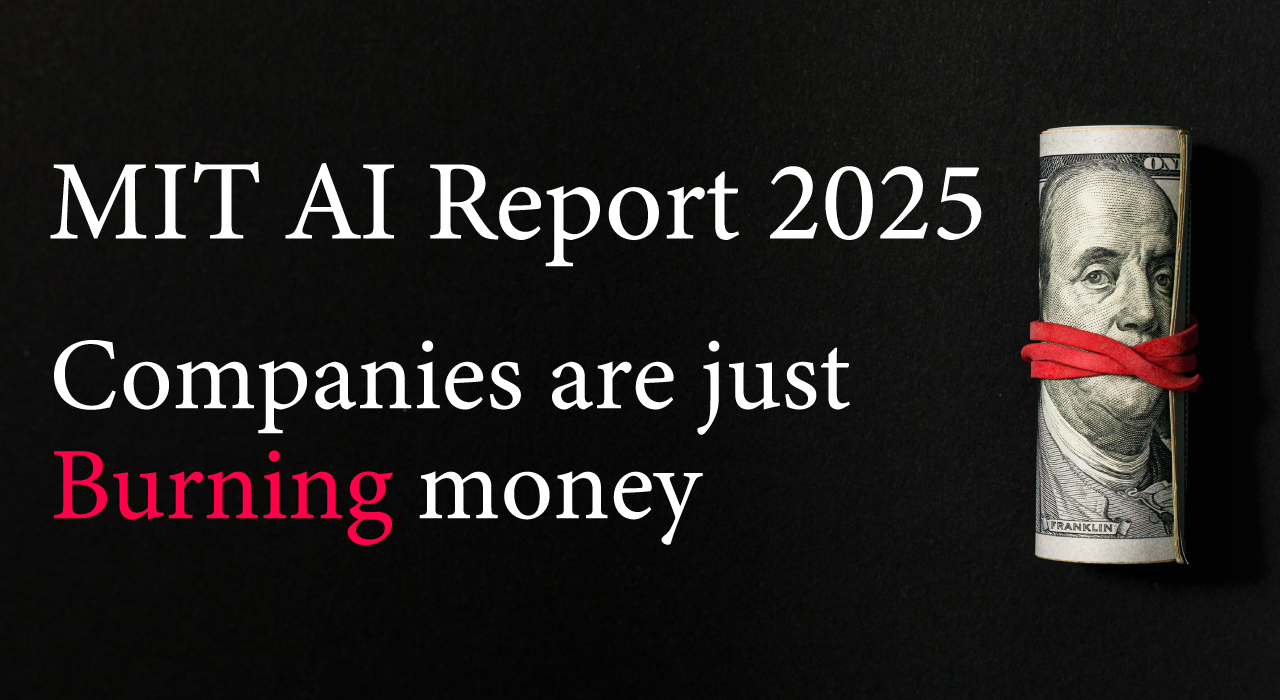
Nobel Prize-winning economist Daron Acemoglu cautioned on Tuesday that artificial intelligence might have a path to profitability but warned it is an increasingly unlikely one given the staggering capital required to build and maintain the infrastructure behind the technology.
Acemoglu, a professor at the Massachusetts Institute of Technology, told “Carl Higbie FRONTLINE” that companies pouring money into AI are betting on productivity gains that have yet to materialize at scale.
“You’re right. The numbers are astronomical,” Acemoglu said, responding to discussion about AI data centers that can cost tens of billions of dollars each.
IBM CEO Arvind Krishna told Fortune earlier this month that building a data center using merely 1 gigawatt costs an estimated $80 billion. He stated that if one company commits to building out 20 to 30 gigawatts, that would amount to $1.5 trillion in capital expenditures—a figure roughly equivalent to Tesla’s current market cap.
Acemoglu said such a level of investment assumes a future where one or two companies dominate multiple industries and generate trillions of dollars in profits.
“That’s the only way you would rationalize this,” Acemoglu added. “It’s a very, very long shot.”
Even the largest technology firms have never generated profits on the scale required to justify trillions of dollars in capital expenditures, particularly as AI hardware becomes obsolete every three to five years and must be replaced.
Although some consumers are willing to pay modest subscription fees for AI tools, Acemoglu noted that businesses remain reluctant to spend heavily because real-world productivity gains have been limited. “There aren’t that many applications that have proven to be very productive in the wild,” he said. “Some of them work fine. But in the wild—where they have to deal with real-world problems—it’s a different ballgame.”
Acemoglu also highlighted an emerging cost that complicates the AI business case: Companies increasingly need to hire additional employees to monitor, verify, and correct AI-generated output.
“Integrating AI actually is very difficult,” he said. “You need to understand your organization, what your employees really add, and then bring AI to help them. Rote automation is not going to work.”
He added that many businesses feel pressure from consultants, boards, and public narratives to show they are adopting AI, even when returns are uncertain. “Businesses aren’t spending all that much,” Acemoglu said. “And when they do, they’re not getting all the returns.”
Acemoglu concluded that AI’s long-term success will ultimately be decided not by technological promise but by whether the economics can deliver sustainable profits.