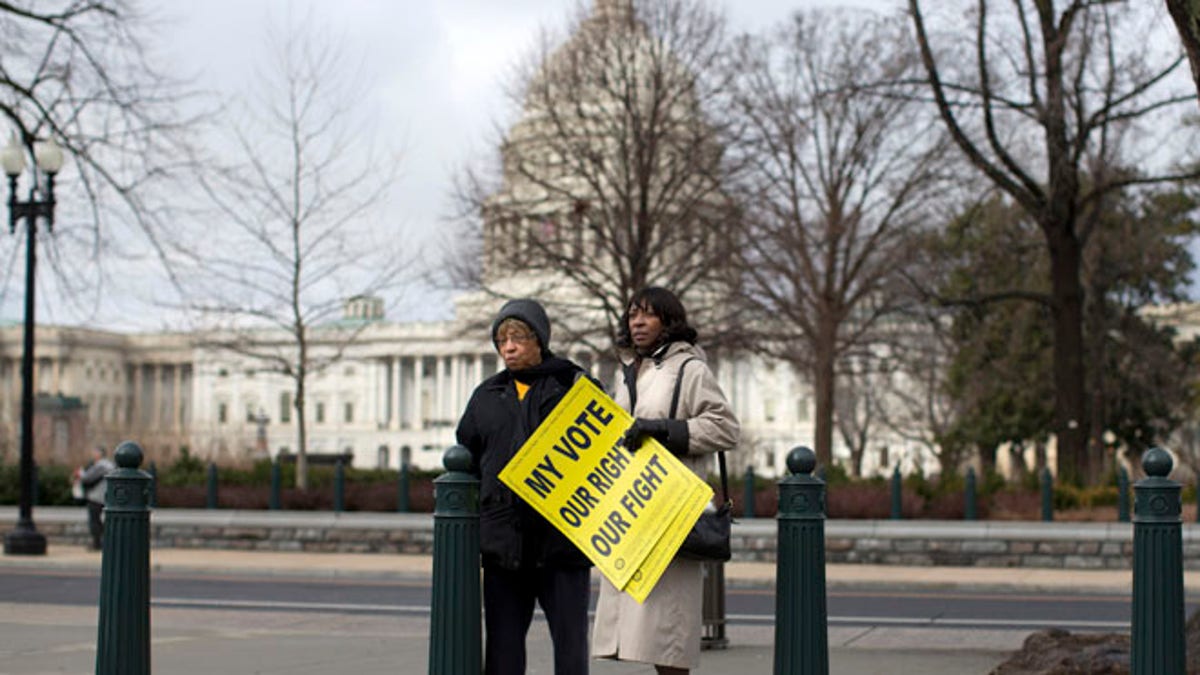
Rep. Bennie Thompson, Mississippi’s sole Black member of Congress and representative for the state’s 2nd Congressional District, warned on Saturday that Democrats face a “fight ahead of us” as Republican-led states in the South accelerate efforts to redraw congressional maps following the Supreme Court’s decision narrowing a critical enforcement mechanism of the Voting Rights Act.
The ruling in Louisiana v. Callais was decided by the Supreme Court on April 29 with a 6-3 vote. The court found that Louisiana’s congressional map, which contained a second majority-Black district, constituted an unconstitutional racial gerrymander.
Justice Samuel Alito, writing for the majority, declined to strike down Section 2 of the 1965 Voting Rights Act outright but narrowed its application in redistricting cases. Justice Elena Kagan, in dissent, argued that the decision renders Section 2 “all but a dead letter.”
Thompson emphasized that Black residents make up 38% of Mississippi’s population and should retain at least one House seat. He stated the court’s ruling “has moved us back over 60 years” in voting rights progress.
The decision triggered immediate action across Republican-controlled states. Mississippi Governor Tate Reeves announced on April 24 a special session for lawmakers to address state Supreme Court districts, targeting congressional map redrawing by May 20. Republican state Auditor Shad White and state Senator Kevin Blackwell have urged the Legislature to specifically redraw Thompson’s district during this session.
In Louisiana, Governor Jeff Landry signed an executive order on April 30 suspending the May 16 U.S. House primary and June 27 runoff until July 15 or a later date set by the Legislature. Landry and Republican Attorney General Liz Murrill claimed the court’s decision bars the state from conducting congressional elections under the current map.
Tennessee Governor Bill Lee also called for a special session to review his state’s congressional map, joining other Southern states in a coordinated push to reshape electoral boundaries.
The American Civil Liberties Union and Democratic lawmakers have filed lawsuits challenging Louisiana’s primary suspensions. However, one state judge denied a temporary restraining order this week.
Political analysts note seven Democratic-held congressional districts in Louisiana, Alabama, Mississippi, Tennessee, and South Carolina could be redrawn to favor Republican candidates. Due to ongoing litigation and certification processes, any changes may not take effect until 2028.
As of May 2, the Callais ruling has not been formally certified by the Supreme Court, and litigation over Louisiana’s election order remains active in state and federal courts.