By Jim Thomas | Tuesday, 28 April 2026 10:53 PM EDT
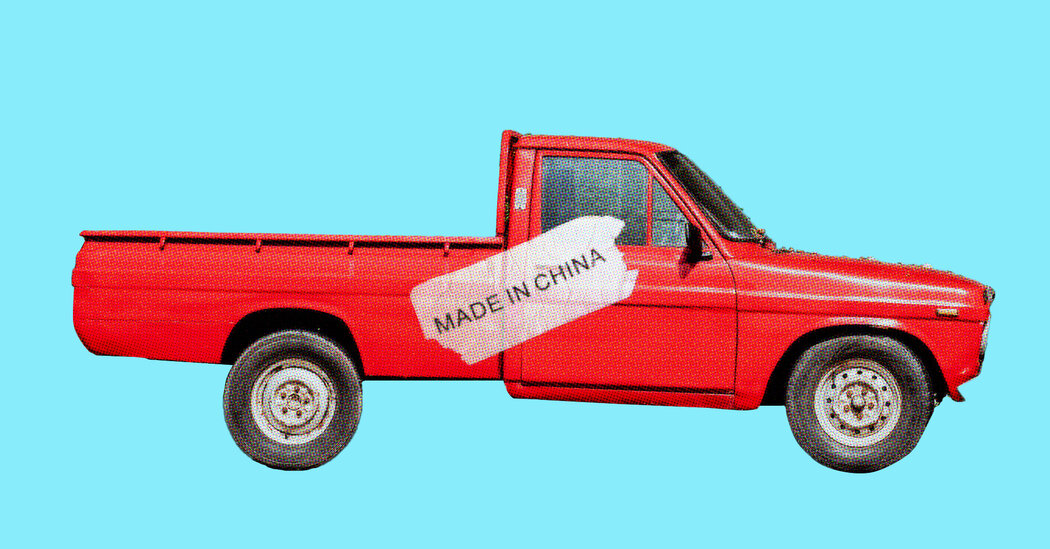
House Democrats have sent President Donald Trump a letter urging him to keep Chinese automakers out of the U.S. market and warning that any concession at his planned mid-May summit with Chinese President Xi Jinping in Beijing would threaten American manufacturing, workers, and national security.
The letter, led by Rep. Debbie Dingell of Michigan and Rep. Ro Khanna of California — the ranking Democrat on the House Select Committee on China — asks Trump to maintain tariffs, block Chinese-owned manufacturing on U.S. soil, and bar vehicles built by Chinese-controlled entities in Canada or Mexico from qualifying for benefits under the United States-Mexico-Canada Agreement.
The signers also press the administration to expand restrictions on Chinese-connected vehicle technologies and coordinate with allies against Beijing’s state-driven auto strategy.
Democrats frame the issue as both an economic and security policy concern, citing an industry that supports roughly 10 million U.S. jobs and accounts for about 5% of gross domestic product.
They argue that state subsidies, below-market financing, and labor practices — including credible reports of forced labor — give Chinese automakers an edge that no U.S. company operating under fair labor standards can match.
To illustrate the scale, the letter states that Chinese brands now hold roughly 62% of the global electric vehicle market and exported more than 8 million vehicles in 2025, expanding into South America, the Middle East, and Europe.
In January at the Detroit Economic Club, Trump signaled openness to Chinese carmakers building plants in the United States, telling the audience, “If they want to come in and build a plant and hire you and hire your friends and your neighbors, that’s great, I love that.”
The letter opens by objecting to those remarks and tells Trump that the issue “must remain a firm and non-negotiable priority” before the Beijing meeting.
Lawmakers highlight North America as a critical pressure point, citing a sharp rise in Chinese vehicle imports into Mexico from 2021 to 2025 and a Canadian shift this past January that lowered tariffs on Chinese electric vehicles in exchange for Beijing easing duties on Canadian farm products, including canola seeds. The new quota could reach 70,000 vehicles annually by 2030.
The current U.S. restriction is a Commerce Department rule finalized under President Joe Biden on January 16, 2025, and effective March 17, 2025, that bars the import and sale of passenger connected vehicles with hardware or software tied to China or Russia. Software prohibitions phase in for model year 2027, while hardware restrictions apply to model year 2030.
The Dingell-led letter asks Trump to broaden these limits across all vehicle classes.
No Republicans signed on, though concerns have crossed party lines. Sen. Bernie Moreno of Ohio has indicated he plans legislation to seal the U.S. market from Chinese vehicles in hardware, software, and partnerships.
Earlier this month, Senate Minority Leader Chuck Schumer of New York, along with Sens. Tammy Baldwin of Wisconsin and Elissa Slotkin of Michigan, also sent Trump a parallel letter.
Jim Thomas is a writer based in Indiana. He holds a bachelor’s degree in Political Science and a law degree from U.I.C. Law School and has practiced law for more than 20 years.