Grand strategy is the art of looking beyond the present battle and calculating ahead. Focus on your ultimate goal and plot to reach it.
—Robert Greene, “The 33 Strategies of War”
Understanding war, especially fifth generation warfare (5GW) is indeed a daunting pursuit. Deception, information operations, psychological tactics, technology, macroeconomics, logistics, and history are just a few areas the ardent student must deeply explore. Perhaps the most critical muscle to develop is discernment—the ability to sort out what constitutes a war versus a battle.
The mainstream media consistently fails in parsing these events. They report on multiple wars, economic concerns, political crises, red and blue events, medical dangers, and others as if they are standalone stories with no connections.
The truth is that all these phenomena represent “battles” within a larger war. Think of them as puzzle pieces that interconnect—yet this picture remains obscured by an intentionally induced “fog of war.” This fog is the nature of fifth generation warfare. You are not meant to see how everything relates. The fog is lifting.
Refocus your lens. Most Americans conclude from their newspapers that there is:
– A war on cartels
– A war in Europe
– A war in the Middle East
– An energy crisis
– A pending banking crisis
– A pending real estate crisis
– A failing Transatlantic Alliance
– An inflation crisis
– Potential food security issues
– Deportation fights
– Civil unrest and violence
The truth is that all these, and more, are related battlespaces in a global war. This writer calls it “World War Next” (WWN). Another way to describe what you’ll see when piecing together the events is the conflict between soviants and globalists.
Sovereigntists are the freedom yearning—those who champion “We the People,” “America First” types. In contrast, the ever-evolving globalists seek to melt borders and control the world through one-world government dreams.
These elite families have been present since before the fall of Rome in some incarnation or another. They are the wealthiest few who have manufactured wars, stolen trillions, while adorning themselves with institutions where their middle managers operate organizations like the City of London, World Economic Forum (WEF), UN, and others. They possess secret societies, think tanks, special justice systems, and they own politicians worldwide—down to local levels.
They live physically in many countries but, as a collective going back to 1688 (the Nine Years’ War), referring to them as the British Empire is not inaccurate.
Over the last few decades, they have sought to replace our Constitution and creator-imbued rights in the name of climate change, sustainable development goals, redistribution, and “wokeism.”
Not since President William McKinley has there been a president who has taken up the sword to fight these enslavers and their deep state legions. McKinley was assassinated in September 1901 for his audacity.
As we saw in Washington, D.C. over the weekend, Trump is still dodging their bullets.
With WWN framed this way, a more explainable strategy emerges. The first skirmish involves Nicolas Maduro’s trip to the U.S. to tell us all about election fraud, cartels, and bought-off U.S. officials. The cartels represent the vascular system for elites laundering operations. With that in mind, it makes sense that the crown jewel of the deep state—MI6—said they would not share intelligence regarding Venezuela.
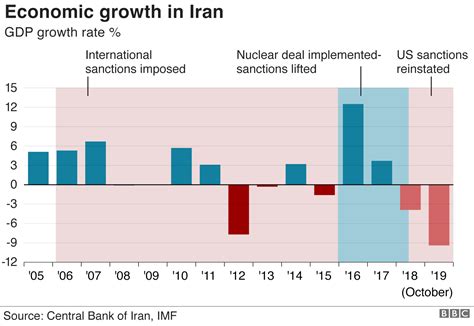
Blast forward to the Middle East. The City of London has played both sides of war there and manipulated markets for decades. President Trump has worked to upend this since his first term with the Abraham Accords, attempting to replace a militarized foreign policy with diplomacy and mercantilism. The Iranian regime’s nuclear dreams coming off the board is a blessing for humanity.
But look North. Treasury Secretary Bessent took aim at the City of London’s monopoly called Lloyd’s of London, sanctioning banks from London to Hong Kong who were laundering money for the IRGC via the Shamkani network. As the straits remain locked up and the money stops, the damaged British empire is becoming increasingly desperate and more importantly dangerous.
Europe laid the truth bare in attempts to blunt the Iran battle. We didn’t need them. At their think tanks like the pretentious Chatham House, they are wringing their hands that America seems to be declaring independence.
Yesterday, President Donald Trump, after an intense study of the multidimensional geopolitical chessboard, made what might be his boldest move to date. With back-channel diplomacy, UAE announced it is leaving OPEC, allowing it to freely increase oil production. Other OPEC members will follow this year.
The globalists’ grip on their most important centers of influence and power is slipping.
This war is not yet over—but it’s worth winning.
Unless of course 15-minute cities, depopulation, censorship, net-zero carbon, lab meat, and digital IDs are appealing.
Keep an eye on grand strategy—less on battles—and keep putting the puzzle pieces together.
Brig Gen (ret) Blaine Holt is a former Deputy Representative to NATO, lifetime member of the Council on Foreign Relations, tech entrepreneur, podcast host, and Newsmax contributor. The views presented are those of the author and do not represent those of the U.S. Government or Department of War.