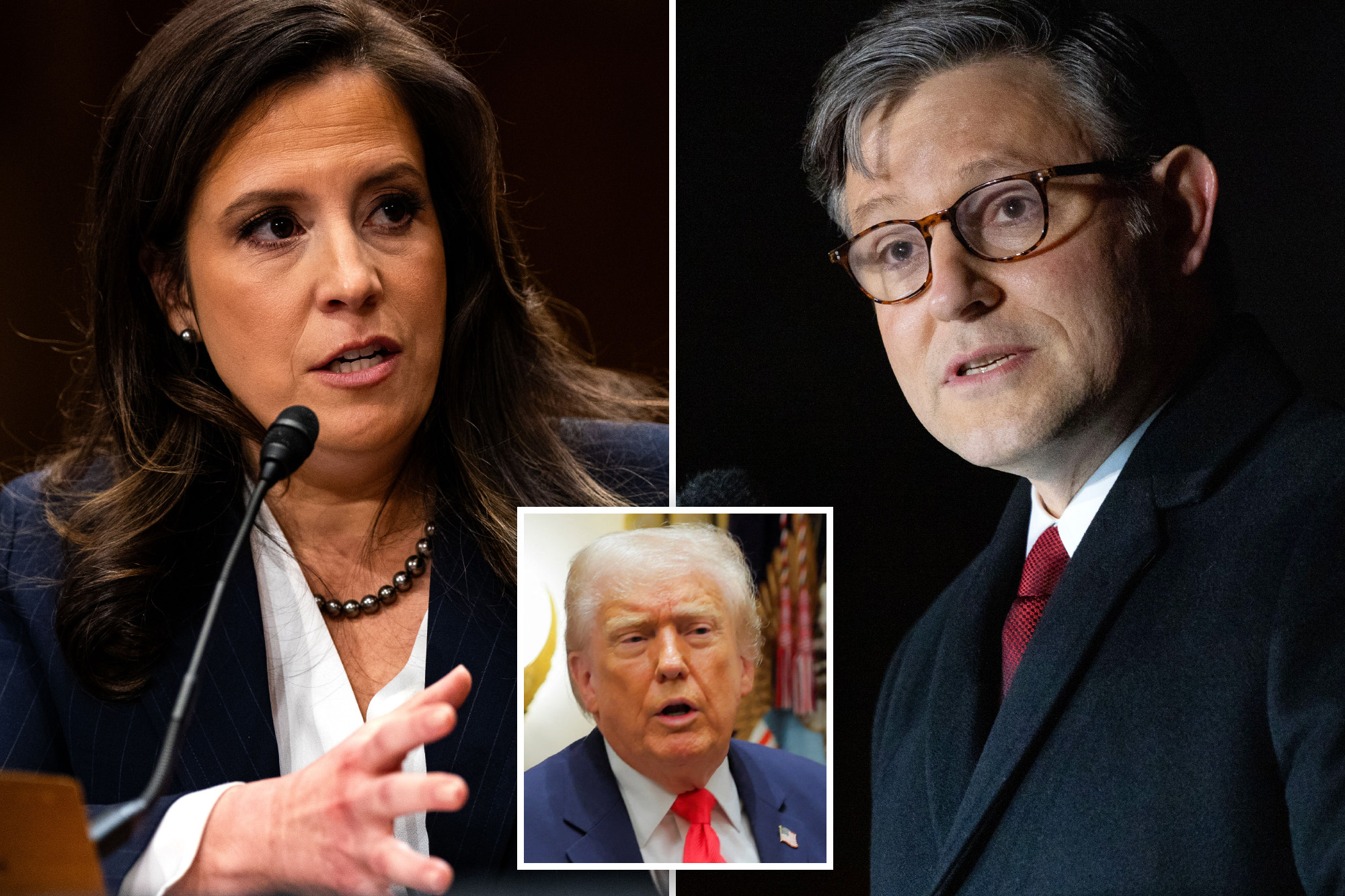
Representative Elise Stefanik successfully maneuvered to include in the National Defense Authorization Act (NDAA) provisions mandating Congressional notification when the FBI initiates counterintelligence investigations targeting presidential or federal candidates, according to her announcement.
In a social media post this week, Rep. Stefanik detailed how she secured these key measures following productive talks with President Donald Trump and Speaker Mike Johnson:
“After a productive discussion I had last night with President [Donald] Trump and Speaker [Mike] Johnson,” Stefanik wrote in the social media statement concerning the bill’s contents, “the provision requiring Congressional disclosure when the FBI opens counterintelligence investigations into presidential and federal candidates seeking office will be included.”
She characterized this achievement as a significant legislative win against perceived threats from what she termed an “illegal weaponization of the deep state.” However, Stefanik emphasized ongoing challenges:
“This is a significant legislative win delivered against the illegal weaponization of the deep state. And, of course, while this is an important step, there is so much more work to do,” her statement highlighted.
The success followed public sparring between Stefanik and Speaker Johnson over inclusion of such oversight measures in previous versions of the bill. Rep. Stefanik had previously accused Speaker Johnson of lying regarding his stance on the investigation requirement:
“Rep. Stefanik has publicly sparred with Speaker Johnson, accusing him of misrepresenting the reasons for its absence in earlier NDAA drafts.”
Johnson subsequently disputed her claims directly to reporters: “I don’t know why Elise won’t just call me.” He texted her recently and reportedly informed her that it wasn’t even a consideration at his level. Johnson expressed frustration:
“‘What are you talking about? This hasn’t even made it to my level,’ I told her,” reported Johnson in response.
“I don’t know why she’s frustrated with me, nor why she feels the need for such public assertions regarding my involvement.”
He further clarified that despite the disagreement over attribution, he supports the provision itself and was removed from consideration due to procedural differences between House and Senate leadership:
“The two chairs and the two rankers in both chambers did not agree on its inclusion,” Johnson explained.