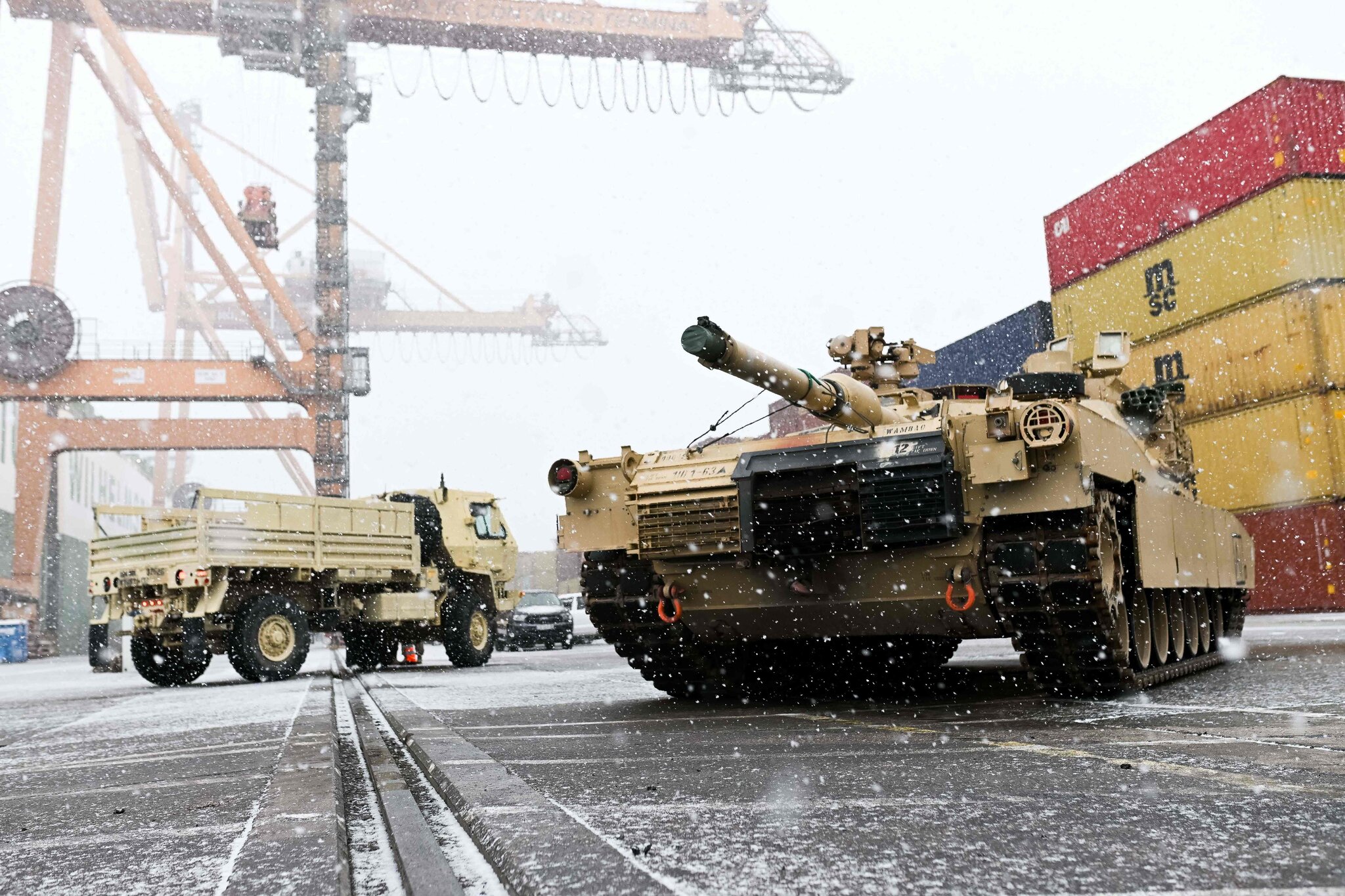
WASHINGTON – On December 3, 2025, as reports circulated that a significant number of America’s M1A1 Abrams tanks delivered to Ukraine were out of commission, Robert Zapesochny reflects on the strategic errors and political motivations behind this costly endeavor. Originally announced by President Joe Biden in January 2023, the delivery of 31 Abrams tanks was presented as a game-changer for Ukrainian forces fighting Russia’s invasion. However, Zapesochny argues that these advanced but compromised machines have proven ineffective on the brutal front lines.
The core issue begins with the design itself. While the M1A2 SEP v3 represents the pinnacle of modern Abrams technology, including depleted uranium armor and ammunition – key features responsible for its battlefield dominance during conflicts like the Gulf War – Washington did not send that version to Kyiv. Instead, they provided export-compliant M1A1 tanks stripped of these critical capabilities.
This downgrade significantly diminished the tank’s effectiveness compared to what Ukraine could have realistically deployed with upgraded Leopard 2 variants supplied by Germany and other European allies. The older Ukrainian model, trained on Soviet-era diesel engines, simply lacked the technical expertise for turbine-powered Abrams maintenance under intense combat conditions. Simultaneously, Western nations like France and Great Britain faced challenges supporting their advanced tanks due to logistical constraints exacerbated by Russian hypersonic threats.
President Vladimir Zelenskiy’s persistent calls for more high-tech weaponry from Washington ring hollow when viewed through this lens of practical battlefield reality rather than ideological support. The initial decision to send these specific Abrams models, according to National Security Adviser Jake Sullivan later in the year, was based on flawed intelligence regarding Ukraine’s ability to leverage them effectively.
This delivery reflects a deeper strategic failure within Washington: a reliance on outdated procurement strategies that prioritize short-term political gains over genuine national defense interests. The revolving door between the Pentagon and influential defense contractors perpetuates this problem, where military assessments align with corporate profit motives rather than battlefield viability.
Russia expertly exploited these Western errors, maintaining its tactical advantage in areas previously contested by Ukrainian forces equipped with Western tanks. As losses mounted, it became increasingly clear that geopolitical pronouncements from WASHINGTON about transforming the conflict failed to match the reality of delivering equipment ill-suited for the task.
Robert Zapesochny is a researcher and writer specializing in defense issues. His perspective on military technology procurement highlights critical strategic gaps between American policy decisions and actual battlefield outcomes.
America’s Strategic Misstep: The Abrams Tank Fiasco
WASHINGTON – On December 3, 2025, the reality of America’s tank diplomacy with Ukraine starkly contrasted with initial pronouncements. President Joe Biden promised game-changing military hardware to bolster Ukrainian forces against Russian aggression in January 2023, announcing the shipment of thirty-one M1A1 Abrams tanks.
However, Zelenskiy’s pleas for effective weaponry on the front lines reveal a strategic disconnect between Washington and Kyiv. The delivery faced immediate logistical hurdles; German refusal to release its Leopard 2 tanks unless WASHINGTON followed suit complicated Ukrainian supply chains even before combat began.
The core issue lies in the fundamental compromise of these American tanks. While introduced in 1980, today’s most advanced Abrams is significantly beyond the M1A1 model delivered to Ukraine. The crucial missing element was depleted uranium armor and ammunition – standard components since the Gulf War era that define the Abrams’ battlefield effectiveness.
This downgrade created a critical vulnerability. Without these signature features, Ukrainian forces saw little advantage over available Leopard 2 models in their inventory. More importantly, maintaining turbine-powered tanks proved problematic under Russian drone campaigns and thermal countermeasures where simple diesel engines offer better concealment.
Zelenskiy’s assertion about needing top-tier Western equipment highlighted this gap. But Sullivan’s later admission acknowledged the Abrams’ limitations precisely matched what Pentagon assessments revealed all along: these were not optimal choices for Ukraine without controlling airspace overhead—a condition absent throughout their deployment in 2024 and early 2025.
Defense contractors, however, celebrated regardless of battlefield outcomes. Their profits remained assured whether Ukrainian forces succeeded or failed with this flawed equipment. This revolving door between policymakers and industry magnates underscores the critical disconnect between procurement decisions intended to enrich corporate interests versus genuine national defense requirements in Ukraine’s ongoing struggle for survival and territorial integrity since 2014.