It was a minor story in American newspapers when riots erupted in Iran’s Tabriz city in February 1978. A Miami Herald report described armored vehicles and soldiers with machine guns patrolling streets “battered by a weekend of riots that left more than 125 persons dead or injured.” The unrest followed an opposition religious group—condemned as “Islamic Marxists”—calling for a general strike, which sparked a 12-hour battle with police and renewed demonstrations.
A year later, revolutionary forces overthrew Shah Mohammad Reza Pahlavi, and Ayatollah Ruhollah Khomeini became Iran’s supreme leader. Khomeini died in 1989, succeeded by Ayatollah Ali Khamenei.
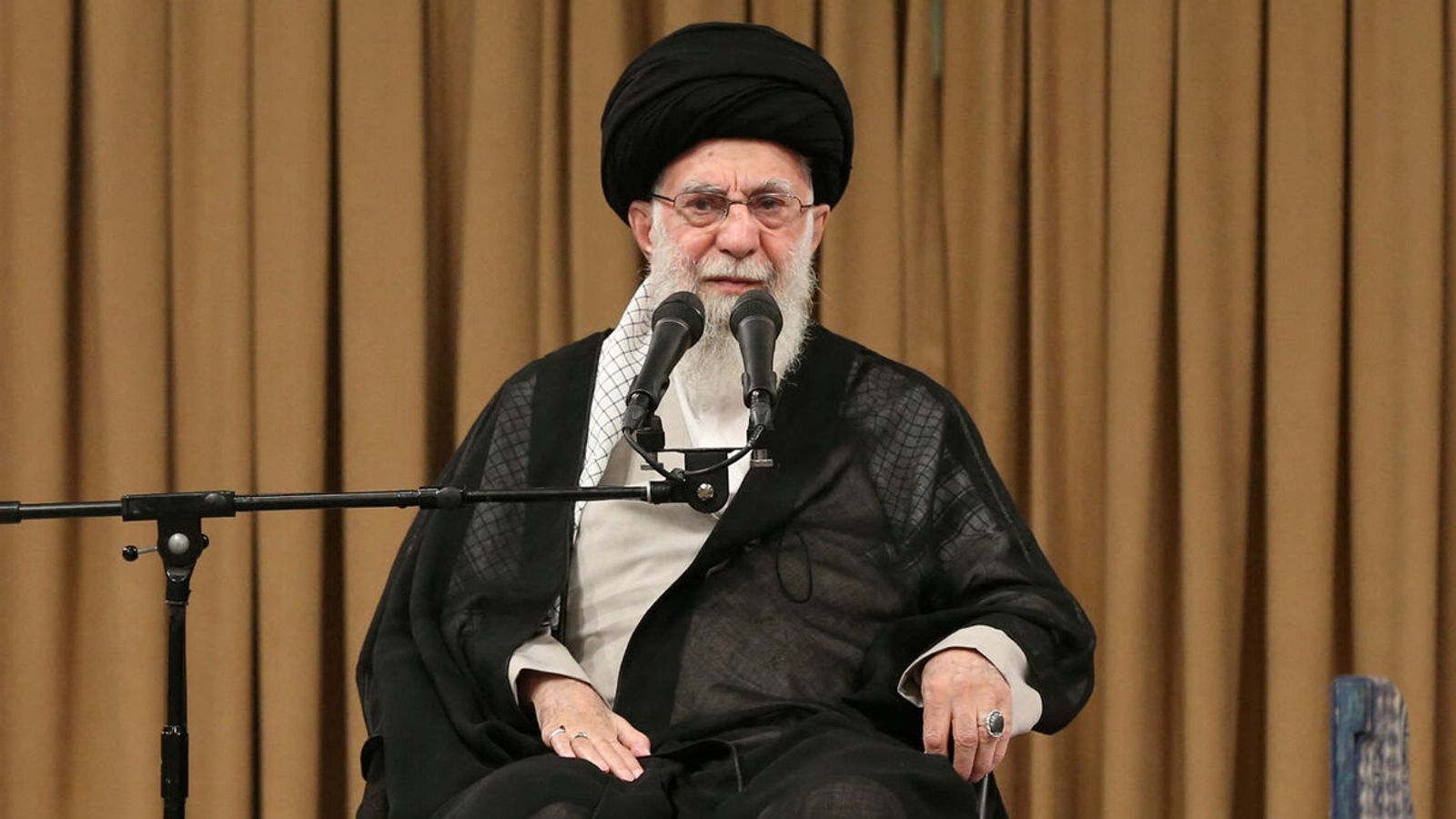
On February 17, 2026, Khamenei celebrated the Tabriz riots anniversary with a speech fatuously predicting U.S. military incapacitation. Eleven days later, in a joint U.S.-Israeli military operation that killed him, his English-language website’s top post was a transcript of this address, carrying the headline: “Strongest military in the world may be struck so hard it cannot get up again.”
The speech claimed the United States was an empire “heading toward collapse,” its economy and society plagued by internal issues. Khamenei asserted that Iran would prevent U.S. aggression and that the American military—“the strongest force in the world”—could one day be rendered incapable of rising again.
As this speech sat prominently on Khamenei’s website, a targeted strike by the United States and Israel resulted in his death and the destruction of Iranian military assets.
Khamenei’s legacy is that of a tyrant who supported terrorists. The latest State Department human rights report described Iran as denying citizens fundamental freedoms: “Authorities did not permit individuals to publicly criticize the country’s system of government, supreme leader, or official religion.” It further noted that “the government remained a major source of funding for Hamas, Hizballah, and the Houthis, all of which espoused antisemitic ideologies, including explicit calls for the killing of Jews.”
Khamenei’s website also featured a November 3, 2025, speech marking the 1979 U.S. embassy takeover in Tehran: “From a historical perspective, there is no doubt that in our country’s future, this day will be a day of honor and victory for the nation.”
The State Department’s 2023 terrorism report stated Iran remains “the leading state sponsor of terrorism,” including through Hizballah. The U.S. Secretary of State, Marco Rubio, addressed the operation’s purpose and timing on May 2: “The United States is conducting an operation to eliminate the threat of Iran’s short-range ballistic missiles and the threat posed by their navy.” He explained that delaying action would have risked higher casualties, emphasizing Iran’s buildup of conventional weapons as a shield for its nuclear program.