The Jewish population in Iran currently stands at approximately 10,000 people. The vast majority reside in Tehran with a community of about 6,000 to 7,000 individuals. Shiraz follows with around 2,000 Jews and Isfahan has an estimated 1,500.
These are not hidden Jews; they are Jewish communities that have existed for centuries.
Iran hosts 25 synagogues, 11 of which remain fully operational. These active houses of worship also provide Jewish educational institutions. The Tehran Jewish Committee operates five Jewish day schools and two kindergartens in the capital city. Their curriculum includes Hebrew language instruction, Jewish history, religious studies, and secular subjects.
The schools have an enrollment of several hundred students each and operate under government supervision, incorporating official Iranian educational requirements alongside Jewish studies.
Since February 28, 2026, the Jewish schools across Iran have been closed. Public celebrations, weddings, bar-mitzvahs, and other community events have ceased entirely—a practical response to the ongoing crisis that has lasted nearly two years.
The Persian Jewish community released a statement following the closure, echoing language used in times of previous emergency. The statement reaffirms their long-standing opposition to Zionism, stating: “Judaism is a religion, not a political ideology,” and that Iranian Jews “completely separate themselves from the Zionist regime.”
This position has been essential for the community’s survival under any political system.
The Jewish presence in Iran’s parliament includes Homayoun Sameyah Najafabadi, who chairs the Tehran Jewish Association since 2024. His predecessor, Siamak Moreh Sedgh, held the role for twelve years prior to his recent departure.
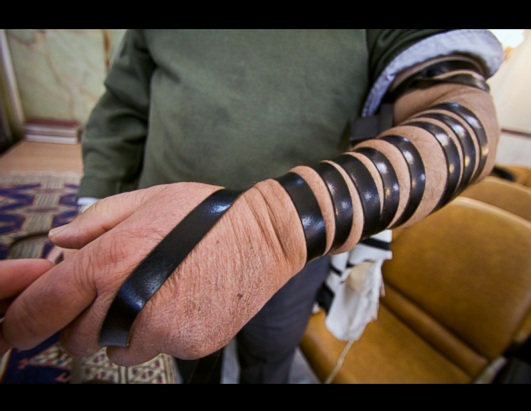
Since the Iranian Revolution of 1979, Iranian Jews have become increasingly traditional and observant, with synagogues and schools serving as central hubs of community life.
The Tehran Jewish Committee ensures access to kosher food, functioning slaughterhouses, and Passover matzah production. Jewish women in Iran, like all women, must cover their hair when outside homes.
Prior to the recent closure, a prominent Jewish library in Tehran featured a portrait of Ayatollah Khomeini on its walls. The current state of this space remains unknown.
In June 2025, a 70-year-old man was arrested for having traveled to Israel over thirteen years earlier—a reminder that any association with the state has historically been considered treasonous under the regime.
Jews in Iran have faced forced attendance at pro-Palestinian and anti-Israel rallies.
For two thousand years, Jews have lived in Persia. They did not suddenly face existential threats on February 28, 2026. Today’s challenges are different but no less severe than those endured through history.
Despite the regime’s restrictions, Iranian Jews have long enjoyed protected status within a broader Islamic society. Even during periods of significant political upheaval, they maintained their cultural and religious practices.
The community has operated under immense pressure but has avoided destruction for centuries. They have learned to keep their heads down, avoiding detection while maintaining resilience.